
|

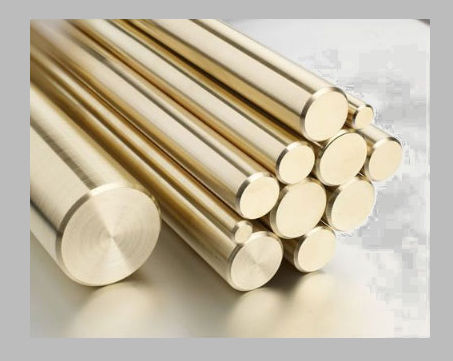
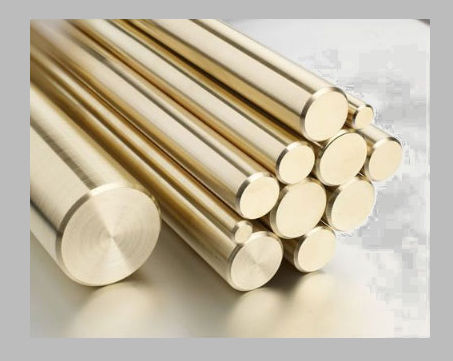
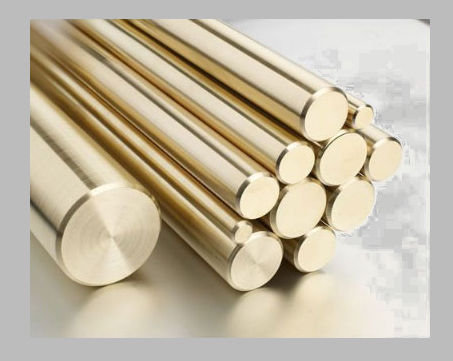
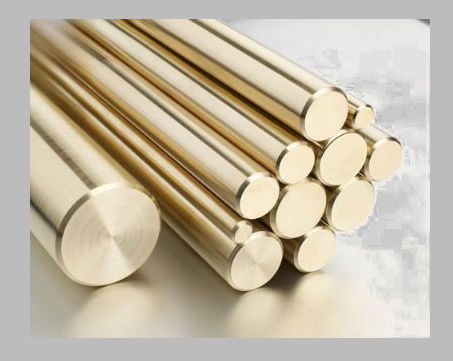
2.0335 Lead Free Brass Rod
350.00 - 450.00 INR/Kilograms
Product Details:
- Type Lead Free Brass Rod
- Material Brass
- Grade CW509L
- Tolerance h9 / h11 or as per requirement
- Alloy 2.0335 (CuZn36Pb1.5AlAs)
- Temper Hard, Half Hard, Soft
- Length 1000 mm - 3000 mm
- Click to View more
X
2.0335 Lead Free Brass Rod Price And Quantity
- 250 Kilograms
- 350.00 - 450.00 INR/Kilograms
2.0335 Lead Free Brass Rod Product Specifications
- 4 mm - 80 mm
- Lead Free Brass Rod
- Hard, Half Hard, Soft
- Golden Yellow
- CW509L
- Round / Hexagonal / Square
- 2.0335 (CuZn36Pb1.5AlAs)
- Approx. 8.5 kg/m (varies by size)
- 1000 mm - 3000 mm
- h9 / h11 or as per requirement
- Brass
- 8.47 g/cm³
- Good (Lead-free compliant)
- Bright / Polished
- Sanitary fittings, Drinking water systems, Electrical components
- EN 12164 / EN 12165
- Excellent
- 900°C - 940°C
- 23% IACS
2.0335 Lead Free Brass Rod Trade Information
- 20000 Kilograms Per Month
- 4 Week
Product Description
2.0335 Lead Free Brass Rod
These rod are also known as Reverting Quality Brass Rod and is mainly used in blanking, riveting , bending, hot forging, watch case and belts, etc.
IS4413
IS4170
DTD-627
BS2874/86 CZ-109
BS2872/86 CZ-108
| Chemical Requirements | CuZn40 | CuZn35 | CuZn37 | CuZn30 |
| Copper | 59.0 - 62.0% | 63.0 - 68.5% | 62.0 - 65.0% | 60.5 - 71.50% |
| Lead | 0.75% max | 0.05% max | 0.30% max. | 0.05% max. |
| Iron | 0.10% max | 0.05% max | 0.10% max | 0.05% max |
| Total Imp. | 0.30% max | 0.30% max | 0.60% max | 0.30% max |
| Zinc | Remainder | Remainder | Remainder | Remainder |
Superior Properties for Diverse Applications
2.0335 Lead Free Brass Rods offer a harmonious blend of mechanical performance, excellent machinability, and high corrosion resistance. Engineered to be lead-compliant, they prove suitable for potable water applications, sanitary fittings, and various electrical components. The rods exhibit consistent quality, whether used in industrial production or custom projects.
Quality Standards and Flexible Specifications
Conforming to stringent EN 12164 and EN 12165 standards, these brass rods assure quality and uniformity. Customers can select from hard, half-hard, or soft tempers, as well as request custom tolerances (h9/h11 or tailored) and finishes. Distributors, manufacturers, and exporters across India rely on this grade for both local and global supply chains.
FAQs of 2.0335 Lead Free Brass Rod:
Q: How is the 2.0335 Lead Free Brass Rod suitable for potable water systems?
A: This brass rod is formulated to be compliant with lead-free standards, minimizing lead content to ensure safety in applications involving drinking water such as sanitary fittings and plumbing components.Q: What are the main benefits of using EN 12164/EN 12165 compliant brass rods?
A: Compliance with EN 12164/EN 12165 guarantees high-quality material, precise dimensions, good mechanical properties, and consistent performance suitable for critical engineering and sanitary uses.Q: When should I choose hard, half hard, or soft temper brass rods?
A: Temper choice depends on the intended application: hard for maximum strength, half hard for balanced workability and resilience, and soft for ease of forming or bending during manufacturing.Q: Where can these brass rods be applied besides sanitary and drinking water systems?
A: 2.0335 Lead Free Brass Rods are also commonly used in electrical components, fittings, and any application requiring bright, corrosion-resistant, and easily machinable material.Q: What is the typical process for manufacturing and finishing the rods?
A: The rods are cold-drawn or hot-rolled to ensure desired shapes and tolerances, then polished to achieve a bright, smooth surface finish that enhances their appearance and resistance to tarnish.Q: How does the corrosion resistance of CW509L brass benefit long-term use?
A: Its excellent corrosion resistance ensures the rods maintain integrity and function in harsh environments, reducing maintenance and replacement costs over time.Tell us about your requirement

Price:
Quantity
Select Unit
- 50
- 100
- 200
- 250
- 500
- 1000+
Additional detail
Mobile number
Email

Other Products in 'Lead Free Brass Rods' category


- Shree Extrusions Limited
GST : 24AADCS0253P1Z9
- 217/218, GIDC, Phase-II, Okha-Rajkot Road, Dared,Jamnagar - 361004, Gujarat, India
- Mr. Pratik Kabra (CEO)
Mobile : +91-9825095960
Sales Department
Mobile : +91-9328105172 / 70, +91-9328105187 


- Phone :08045804979
- Mr Pratik (Director)
- Mobile :08045804979
 marketing@shree-extrusion.com
 Send Inquiry

 |
SHREE EXTRUSIONS LTD.
All Rights Reserved.(Terms of Use) Developed and Managed by Infocom Network Private Limited. |
