

|

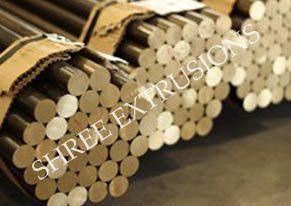
C66700 Manganese Brass
480 INR/Kilograms
Product Details:
- Type Manganese Brass Rod
- Material Brass
- Grade C66700
- Tolerance H9
- Alloy C66700
- Temper Hard, Half Hard, Soft
- Length 500 mm - 3000 mm
- Click to View more
X
C66700 Manganese Brass Price And Quantity
- 450.00 - 500.00 INR/Kilograms
- 250 Kilograms
- 480 INR/Kilograms
C66700 Manganese Brass Product Specifications
- Brass
- 5 mm - 150 mm
- Golden Yellow
- Manganese Brass Rod
- H9
- Round
- As per standard length and diameter
- C66700
- C66700
- Hard, Half Hard, Soft
- 500 mm - 3000 mm
- Excellent
- Good
- Extruded / Drawn
- 16% IACS
- Bright / Polished
- Standard Export Packing
- ASTM B138 / B138M
- 8.17 g/cm3
- Copper (Cu): 60-66%, Zinc (Zn): balance, Manganese (Mn): 2.5-5.0%
- Marine Hardware, Valve Components, Fasteners, Hydraulic Fittings
- Up to 450 MPa
- 10% (min)
C66700 Manganese Brass Trade Information
- 20000 Kilograms Per Month
- 4 Week
Product Description
C66700 Manganese Brass
Excellent hot and cold workability; good forge ability. Fabricated by bending, coining, coppersmith, drawing and upsetting, hot forging and pressing, knurling, roll threading, shearing, spinning, swaging, and stamping.
Common Fabrication Processes
Excellent hot and cold workability; good forge ability. Fabricated by bending, coining, coppersmith, drawing and upsetting, hot forging and pressing, knurling, roll threading, shearing, spinning, swaging, and stamping.
Common Fabrication Processes
- Bending
- Blanking
- Forming
- Resistance Welding
- Seam and Butt Welding
- Spot Welded Components
- Stamping
| Equivelent Specifications | |
| Specifications | Designation |
| ISO | C67300 |
| Europen | C67400 |
| BS | C67420 |
| Australia | 673 |
| Chemical Composition: | |||||
|
| Cu | Fe | Pb | Mn | Zn |
| Min/Max | 68.5-71.5 | 0-0.1 | 0-0.07 | 0.8-1.5 | Rem |
| Typical uses | |||
| Product Category | Product | Reason Category | Reason |
| Industrial
| Resistance Weldable Brass Products | Corrosion Resistance | Corrosion Resistanc |
| Resistance Weldable Brass Products | Mechanical Properties | Moderate Strength | |
| Resistance Weldable Brass Products | Welding Characteristics | Weldability | |
| Physical Properties | |
| Melting Point - LiquidusF | 2000 |
| Melting Point - SolidusF | 1920 |
| Densitylb/cu in. at 68F | 0.31 |
| Specific Gravity | 8.53 |
| Electrical Conductivity% IACS at 68F | 17 |
| Thermal ConductivityBtu/ sq ft/ ft hr/ F at 68F | 56 |
| Coefficient of Thermal Expansion 68-57210?6 per F (68 572F) | 11.1 |
| Specific Heat CapacityBtu/ lb /F at 68F | 0.09 |
| Modulus of Elasticity in Tensionksi | 16000 |
| Thermal Properties | ||
| Treatment | Minimum* | Maximum* |
| *Measured in Fahrenheit |
|
|
| Annealing | 930 | 1300 |
| Hot Treatment | 1340 | 1560 |
| Fabrication Properties | ||
| Technique | Suitability | Footnote |
| Soldering | Excellent |
|
| Brazing | Excellent |
|
| Oxyacetylene Welding | Good |
|
| Gas Shielded Arc Welding | Fair |
|
| Coated Metal Arc Welding | Not Recommended |
|
| Spot Weld | Excellent |
|
| Seam Weld | Excellent |
|
| Butt Weld | Excellent |
|
| Capacity for Being Cold Worked | Excellent |
|
| Capacity for Being Hot Formed | Fair | Actually fair to good. |
| Machinability Rating | 30 |
|
Outstanding Mechanical Properties
C66700 Manganese Brass is engineered for mechanical reliability, offering up to 450 MPa tensile strength and a minimum elongation of 10%, making it ideal for demanding applications. Its resilience, combined with H9 tolerance and choice of temper, ensures components maintain precision and durability across various operating conditions.
Tailored for Effective Machining and Finishing
This alloys composition allows for good machinability, supporting efficient processing in manufacturing environments. The rods come with a bright and polished surface, enabling readiness for aesthetics-driven or functional uses. Its extruded and drawn production methods enhance dimensional consistency and finish quality.
Versatile Applications Across Industries
Favored in the marine sector for its excellent corrosion resistance, C66700 Manganese Brass finds frequent use in components like fasteners, valve bodies, and hydraulic fittings. Its adaptability makes it suitable for both new installations and maintenance, ensuring lasting service in varied operational settings.
FAQs of C66700 Manganese Brass:
Q: How is C66700 Manganese Brass different from conventional brass alloys?
A: C66700 Manganese Brass incorporates manganese and offers a unique blend of strength and corrosion resistance not typically seen in standard brass. With higher tensile strength and improved durability, it excels in marine and hydraulic applications compared to regular brass types.Q: What is the process involved in manufacturing C66700 Manganese Brass rods?
A: These rods are produced using extrusion or drawing methods, ensuring precise shapes and consistent mechanical properties. This process results in rods with a polished, bright finish and controlled tolerances to meet industry standards.Q: Where can C66700 Manganese Brass rods be used effectively?
A: The rods are extensively used in marine hardware, valve components, fasteners, hydraulic fittings, and environments requiring excellent corrosion resistance and reliable mechanical performance. Their adaptability also makes them popular for repair and retrofit projects.Q: When should I select C66700 Manganese Brass for my application?
A: Choose C66700 Manganese Brass when your project demands a combination of good machinability, superior corrosion resistance, and dependable tensile strength, especially in challenging environments such as marine or hydraulic systems.Q: What are the benefits of using C66700 Manganese Brass in marine hardware?
A: Its excellent resistance to corrosion, robust mechanical properties, and long-term durability in harsh marine atmospheres make it ideal for marine hardware, minimizing maintenance and replacement costs.Q: How does the chemical composition of C66700 affect its conductivity and machining?
A: With 16% IACS conductivity, C66700 offers moderate electrical performance and good machinability, attributed to its balanced copper, zinc, and manganese content, making it suitable for components where both mechanical and functional attributes are required.Tell us about your requirement

Price:
Quantity
Select Unit
- 50
- 100
- 200
- 250
- 500
- 1000+
Additional detail
Mobile number
Email

Other Products in 'Manganese Brass Rods' category


- Shree Extrusions Limited
GST : 24AADCS0253P1Z9
- 217/218, GIDC, Phase-II, Okha-Rajkot Road, Dared,Jamnagar - 361004, Gujarat, India
- Mr. Pratik Kabra (CEO)
Mobile : +91-9825095960
Sales Department
Mobile : +91-9328105172 / 70, +91-9328105187 


- Phone :08045804979
- Mr Pratik (Director)
- Mobile :08045804979
 marketing@shree-extrusion.com
 Send Inquiry
 |
SHREE EXTRUSIONS LTD.
All Rights Reserved.(Terms of Use) Developed and Managed by Infocom Network Private Limited. |
