
|

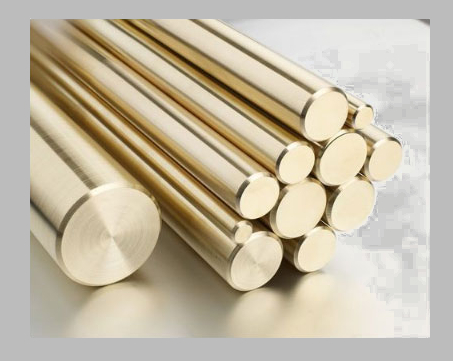
CuZn37 Lead Free Brass Rod
350.00 - 450.00 INR/Kilograms
Product Details:
- Type Lead Free Brass Rod
- Material Brass
- Grade CuZn37
- Tolerance 0.02 mm
- Alloy CuZn37
- Temper Hard
- Length 1 Meter
- Click to View more
X
CuZn37 Lead Free Brass Rod Price And Quantity
- 350.00 - 450.00 INR/Kilograms
- 250 Kilograms
CuZn37 Lead Free Brass Rod Product Specifications
- Rod
- 0.02 mm
- Lead Free Brass Rod
- 20 mm
- Brass
- Golden Yellow
- 1 Meter
- 1.7 kg
- CuZn37
- CuZn37
- Hard
- Excellent
- 16 % IACS
- 8.5 g/cm³
- 80%
- EN 12164
- Yes
- 0.03% max
- Bright
- 920°C
- Automobile, Electrical & Plumbing
- Bundle
CuZn37 Lead Free Brass Rod Trade Information
- 20000 Kilograms Per Month
- 4 Week
Product Description
CuZn37 Lead Free Brass Rod
These rod are also known as Reverting Quality Brass Rod and is mainly used in blanking, riveting , bending, hot forging, watch case and belts, etc.
IS4413
IS4170
DTD-627
BS2874/86 CZ-109
BS2872/86 CZ-108
| Chemical Requirements | CuZn40 | CuZn35 | CuZn37 | CuZn30 |
| Copper | 59.0 - 62.0% | 63.0 - 68.5% | 62.0 - 65.0% | 60.5 - 71.50% |
| Lead | 0.75% max | 0.05% max | 0.30% max. | 0.05% max. |
| Iron | 0.10% max | 0.05% max | 0.10% max | 0.05% max |
| Total Imp. | 0.30% max | 0.30% max | 0.60% max | 0.30% max |
| Zinc | Remainder | Remainder | Remainder | Remainder |
High-Performance Lead-Free Brass Rods
Engineered from CuZn37 alloy, these lead-free brass rods provide excellent machinability and corrosion resistance, ensuring longevity in demanding environments. Their bright finish and precise tolerances make them ideal for technical and decorative components, while compliance with RoHS standards guarantees safe, eco-responsible application.
Versatile Industrial Applications
CuZn37 rods are widely used across automobile, electrical, and plumbing sectors due to their robustness and conductive properties. Their tailored hardness and uniformity cater to high-stress and high-precision scenarios, supporting manufacturers, builders, OEMs, and repair professionals alike.
FAQs of CuZn37 Lead Free Brass Rod:
Q: How does CuZn37 Lead Free Brass Rod benefit electrical and plumbing applications?
A: CuZn37 Lead Free Brass Rod offers excellent electrical conductivity (16% IACS) and superior corrosion resistance, making it particularly advantageous for electrical connectors and plumbing fittings where reliable performance and longevity are essential.Q: What is the typical manufacturing process for these brass rods?
A: These rods are manufactured to EN 12164 standards, beginning with alloying pure copper and zinc (CuZn37), casting, hot extrusion, and then cold drawing to hard temper for dimensional accuracy and a bright surface finish.Q: Where can CuZn37 Lead Free Brass Rods be used in the automobile industry?
A: In automotive contexts, these rods are often utilized in the creation of precision-engineered components such as terminals, connectors, and fittings, thanks to their high machinability, reliable tolerance, and resistance to wear and corrosion.Q: What are the key benefits of using a lead-free and RoHS compliant brass rod?
A: Opting for lead-free, RoHS compliant brass rods eliminates hazardous materials in products, ensuring safety for users and compliance with regulations, while also supporting environmental responsibility.Q: How does the tolerance of 0.02 mm influence the rods application?
A: A tolerance of 0.02 mm ensures dimensional consistency throughout the rod length, making it ideal for precision assemblies where tight fittings and minimal error margins are required.Q: When should I consider using CuZn37 Lead Free Brass Rod over traditional brass?
A: Consider CuZn37 Lead Free Brass Rod when regulatory compliance, environmental sustainability, or low lead content is required, particularly in consumer goods or potable water systems where safety is paramount.Tell us about your requirement

Price:
Quantity
Select Unit
- 50
- 100
- 200
- 250
- 500
- 1000+
Additional detail
Mobile number
Email

Other Products in 'Lead Free Brass Rods' category



- Shree Extrusions Limited
GST : 24AADCS0253P1Z9
- 217/218, GIDC, Phase-II, Okha-Rajkot Road, Dared,Jamnagar - 361004, Gujarat, India
- Mr. Pratik Kabra (CEO)
Mobile : +91-9825095960
Sales Department
Mobile : +91-9328105172 / 70, +91-9328105187 


- Phone :08045804979
- Mr Pratik (Director)
- Mobile :08045804979
 marketing@shree-extrusion.com
 Send Inquiry

 |
SHREE EXTRUSIONS LTD.
All Rights Reserved.(Terms of Use) Developed and Managed by Infocom Network Private Limited. |
