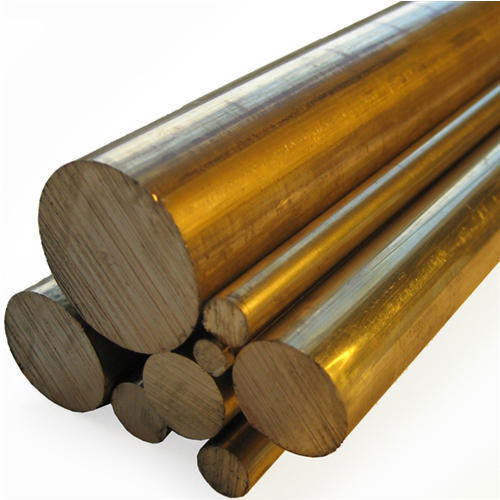


|

IS 291 GRADE Naval Brass Rod
350.00 - 450.00 INR/Kilograms
Product Details:
- Type Naval Brass Rod
- Material Copper-Zinc Alloy
- Grade IS 291
- Tolerance 0.5 mm
- Alloy IS 291
- Temper Half Hard
- Length 3 m (Standard)
- Click to View more
X
IS 291 GRADE Naval Brass Rod Price And Quantity
- 250 Kilograms
- 350.00 - 450.00 INR/Kilograms
IS 291 GRADE Naval Brass Rod Product Specifications
- Round, Hex, Square
- Golden Yellow
- IS 291
- IS 291
- Copper-Zinc Alloy
- 10 mm to 80 mm
- Half Hard
- 0.5 mm
- 3 m (Standard)
- Naval Brass Rod
- Varies by size
- IS 291:1989
- 60%-63%
- Up to 1%
- Good
- Bright/Polished
- Marine, Shipbuilding, Electrical Fittings, Valves, Hardware
- 350 N/mm² min
- 8.4 g/cm³
- 15-20% IACS
- 36%-39%
- Excellent in marine applications
IS 291 GRADE Naval Brass Rod Trade Information
- 20000 Kilograms Per Month
- 4 Week
Product Description
IS 291 GRADE Naval Brass Rod
We fabricate a finest range of Naval Brass, which are renowned for their high strength, rust proof and durability features. Naval brass is a copper alloy containing 60% copper, 75% tin and around 39.25% zinc. These are made up of high-grade raw material and can be availed in the form of sheet, plate, rods and circle. Our range of naval brass is broadly used in marine and construction industry.
Specifics:
Naval Brass - IS: 291 Gr l & ll
Specifications:
| Rod Brass |
|
| Naval Brass |
|
| Chemical Requirements | Garde I | Grade II | |||
| Copper | 61.0 - 64.0% | 59.0 - 62.0% | |||
| Lead | 0.20% max | 0.50 to 1.0% | |||
| Tin | 1.0 to 1.50% | 0.50 to 1.0% | |||
| Iron | 0.10% max | - | |||
| Other Imp. | 0.20% max | 0.20% max | |||
| Zinc | Remainder | Remainder | |||
| Physical Properties | |||||
| Condition | Size | T.S. 2 Kg/mm2 | EL% Min | T.S. 2 Kg/mm2 | EL% Min |
| Half-Hard (HB) | Upto 12.5 | 40 min | 18% | 40 min | 15% |
| Fabrication Properties | ||
| Capacity for being |
|
|
| Cold Worked | Fair | Poor |
| Hot Worked | Excellent | Good |
| Machinability Rating | 30% | 50% |
| Forgeability Rating | 90% | 90% |
| Silver Alloy Brazing | Excellent | Excellent |
| Soft Soldering | Excellent | Excellent |
| Oxyacetylene Welding | Good | Not Suitable |
| Uses | ||
| Gr I : Condenser Components, Propeller Shaft, Marine hardware where bending is required. | ||
| Gr II : Marine Hardware, Screw Machine, Valve Stems and Components for Naval use. | ||
Exceptional Corrosion Resistance for Marine Use
IS 291 GRADE Naval Brass Rods excel in harsh marine conditions due to their unique alloy composition. The addition of tin and optimized copper-zinc balance ensures superior resistance to saltwater and various corrosive elements. This makes them highly reliable for shipbuilding and other marine applications, where durability is paramount and maintenance costs can be significantly reduced.
Versatile Applications and Superior Machinability
These rods are ideal for diverse applications, including valves, ship hardware, and electrical fittings. The half-hard temper facilitates precise machining while maintaining strength, making it a preferred material among manufacturers. With a polished finish and good electrical conductivity (1520% IACS), it supports both functional and aesthetic requirements in industrial and decorative contexts.
FAQs of IS 291 GRADE Naval Brass Rod:
Q: What are the key benefits of using IS 291 GRADE Naval Brass Rod in marine environments?
A: Its excellent corrosion resistance, derived from a balanced copper-zinc-tin alloy, makes it ideal for withstanding harsh marine conditions, reducing maintenance, and prolonging service life in shipbuilding and related applications.Q: How can I select the appropriate size and shape for my application?
A: IS 291 GRADE Naval Brass Rods are available in round, hex, and square profiles, with diameters ranging from 10 mm to 80 mm and a standard length of 3 meters. The best choice depends on your specific engineering or architectural requirements.Q: When should this brass rod be preferred over other alloys?
A: Choose IS 291 GRADE Naval Brass Rod when your project demands excellent corrosion resistance, moderate electrical conductivity, high strength, and reliable machinability, especially for marine and electrical uses.Q: What is the typical process for installing or machining these rods?
A: Owing to their half-hard temper, these rods can be cut, drilled, turned, and polished using standard metalworking tools. It is advised to follow industry best practices to maintain integrity and finish quality.Q: Where are IS 291 GRADE Naval Brass Rods commonly used?
A: They are widely applied in marine shipbuilding, electrical fittings, valve manufacturing, and marine hardware due to their durable, anti-corrosive properties and attractive finish.Q: What makes the finish and color of these rods stand out?
A: The bright or polished finish along with the natural golden yellow hue of the alloy provides both aesthetic appeal and additional resistance to environmental factors.Tell us about your requirement

Price:
Quantity
Select Unit
- 50
- 100
- 200
- 250
- 500
- 1000+
Additional detail
Mobile number
Email

Other Products in 'Naval Brass Rod' category



- Shree Extrusions Limited
GST : 24AADCS0253P1Z9
- 217/218, GIDC, Phase-II, Okha-Rajkot Road, Dared,Jamnagar - 361004, Gujarat, India
- Mr. Pratik Kabra (CEO)
Mobile : +91-9825095960
Sales Department
Mobile : +91-9328105172 / 70, +91-9328105187 


- Phone :08045804979
- Mr Pratik (Director)
- Mobile :08045804979
 marketing@shree-extrusion.com
 Send Inquiry

 |
SHREE EXTRUSIONS LTD.
All Rights Reserved.(Terms of Use) Developed and Managed by Infocom Network Private Limited. |
