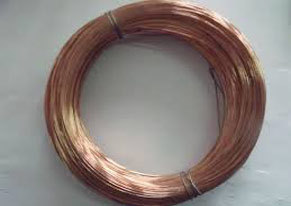


|

C70500 CuNi6
480 INR/Kilograms
Product Details:
- Size Customized or standard sizes
- Condition New
- Surface Treatment Bright / Polished
- Cross Dimension Dependent on width and thickness
- Finish Smooth / Bright
- Diameter Applicable for wire, usually specified as required
- Outer Diameter Not applicable (strip/sheet)
- Click to View more
X
C70500 CuNi6 Price And Quantity
- 250 Kilograms
- 450.00 - 500.00 INR/Kilograms
- 480 INR/Kilograms
C70500 CuNi6 Product Specifications
- 0.05 mm - 3 mm
- Good mechanical strength
- Strip, Sheet, or Coil
- Customized or standard sizes
- Customized or as required
- C70500 (CuNi6)
- Silver / Metallic
- Customized or as required
- 80-140 HV
- Bright / Polished
- Strip / Sheet / Coil
- New
- Copper Nickel Alloy (CuNi)
- Dependent on width and thickness
- Smooth / Bright
- Not applicable (strip/sheet)
- Applicable for wire, usually specified as required
- Electronics, Marine, Heat Exchangers, Mechanical uses
- 100-120 MPa
- 22 W/m.K
- Min 35%
- 1170C - 1240C
- Over 350 MPa
- Cu 88%, Ni 10.5%, Mn 1.4%
- ASTM B122/B122M
- 140 GPa
- Excellent in marine and industrial atmospheres
- 8.89 g/cm3
- 6.3 % IACS
C70500 CuNi6 Trade Information
- 20000 Kilograms Per Month
- 2-7 Days
Product Description
C70500 CuNi6
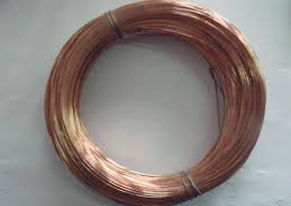
CuNi6 is a copper-nickel alloy (CuNi alloy) with low resistivity suitable for use at temperatures up to 300°C (570°F). The alloy is used in forming wires that are typically used for low-temperature applications such as heating cables.
| Chemical Composition: | ||
|
| Ni % | Cu % |
| Nominal composition | 6 | Bal. |
| Mechanical properties: | |||
| Wire size | Yield strength | Tensile strength | Elongation |
| Ø | Rp0.2 | Rm | A |
| Mm | MPa | MPa | % |
| 1 | 100 | 280 | 30 |
| Physical Properties: | |
| Density g/cm3 | 8.9 |
| Electrical resistivity at 20°C O mm2/m | 0.1 |
| Temperature factor of resistivity: | |||||
| Temperature°C | 20 | 100 | 200 | 300 |
|
| Ct | 1 | 1.06 | 1.11 | 1.19 |
|
| Coefficient of thermal expansion: | |
| Temperature°C | Thermal Expansion x10-6/K |
| 20 - 100 | 16 |
| Thermal conductivity: | |
| Temperature°C | 20 |
| W m-1 K-1 | 90 |
| Specific Heat Capacity: | |
| Temperature°C | 20 |
| kJ kg-1 K-1 | 0.38 |
| Melting point °C | 1090 |
| Max continuous operating temperature in air °C | 300 |
| Magnetic properties | The material is non-magnetic |
Versatility Across Applications
C70500 CuNi6 excels in electronics, marine engineering, and heat exchanger manufacturing due to its balanced physical and mechanical properties. Its excellent corrosion resistance and adaptability in shape and size make it a trusted material for both custom and standardized components in demanding industrial environments.
Superior Mechanical and Thermal Performance
With a tensile strength above 350 MPa and elongation of at least 35%, C70500 CuNi6 provides a robust solution for applications requiring durability and resilience. Its thermal conductivity (22 W/m.K) and modulus of elasticity (140 GPa) further enhance its performance in heat transfer and structural uses.
Customized Supply Solutions
This alloy is offered by manufacturers, distributors, and suppliers in India, delivered in sheet, strip, coil, or wire forms. Sizes, thicknesses, and surface finishes (bright/polished) can be tailored to meet unique project requirements, ensuring quality and flexibility for diverse engineering and manufacturing needs.
FAQs of C70500 CuNi6:
Q: What are the primary applications of C70500 CuNi6 alloy?
A: C70500 CuNi6 is commonly used in electronics, marine components, heat exchangers, and mechanical equipment due to its remarkable corrosion resistance and mechanical properties.Q: How does the manufacturing process of C70500 ensure corrosion resistance?
A: The alloys compositionhigh copper with nickel and manganeseoffers inherent resistance to corrosion, which is further enhanced by controlled processing and quality surface treatments such as bright or polished finishes.Q: Where is C70500 CuNi6 best utilized in marine and industrial settings?
A: C70500 CuNi6 is ideal for parts exposed to aggressive marine and industrial atmospheres, including piping, heat exchanger tubing, and electrical connectors, thanks to its durability and resistance to contamination.Q: What benefits does C70500 CuNi6 provide compared to standard copper alloys?
A: Compared to typical copper alloys, C70500 offers superior mechanical strength, extended service life in corrosive environments, and reliable thermal and electrical conductivity, making it more suitable for high-demand applications.Q: When is it recommended to use customized sizes and finishes for this alloy?
A: Customized sizes and finishes are preferred when project specifications require unique dimensions or enhanced surface qualities for performance, aesthetics, or fitting into integrated systems.Q: How is the alloy supplied and in what conditions?
A: C70500 CuNi6 is distributed, exported, and supplied in new condition by manufacturers and traders in India. It is available as strip, sheet, coil, or wire with dimensions and surface treatments tailored as required.Q: What is the typical process for specifying this alloy for an industrial application?
A: The process involves determining the required mechanical properties, dimensions, shape, and surface finish; consulting with the supplier on customization options; and ensuring the selection meets the application and standard (ASTM B122/B122M).Tell us about your requirement

Price:
Quantity
Select Unit
- 50
- 100
- 200
- 250
- 500
- 1000+
Additional detail
Mobile number
Email

Other Products in 'Copper Nickel Rod' category

- Shree Extrusions Limited
GST : 24AADCS0253P1Z9
- 217/218, GIDC, Phase-II, Okha-Rajkot Road, Dared,Jamnagar - 361004, Gujarat, India
- Mr. Pratik Kabra (CEO)
Mobile : +91-9825095960
Sales Department
Mobile : +91-9328105172 / 70, +91-9328105187 


- Phone :08045804979
- Mr Pratik (Director)
- Mobile :08045804979
 marketing@shree-extrusion.com
 Send Inquiry

 |
SHREE EXTRUSIONS LTD.
All Rights Reserved.(Terms of Use) Developed and Managed by Infocom Network Private Limited. |
