

|

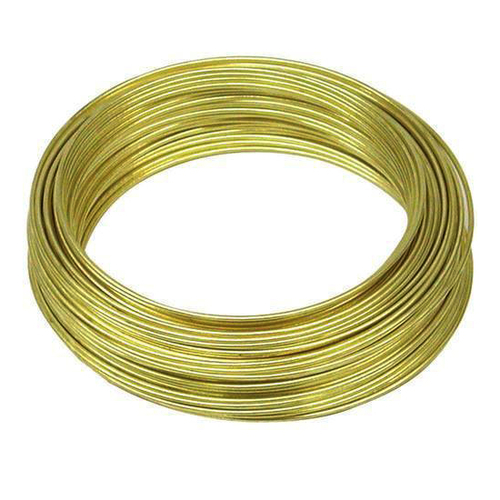
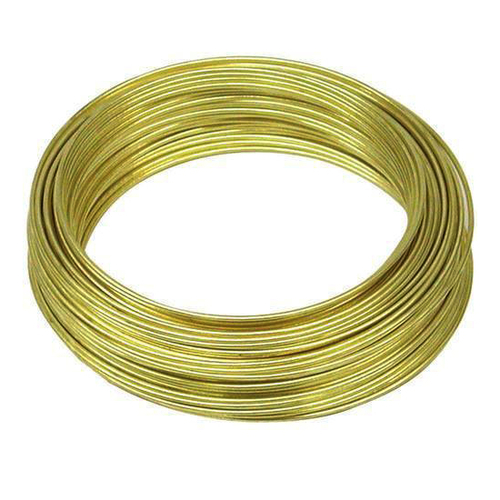
CW502L Lead Free Brass Wires
350.00 - 450.00 INR/Kilograms
Product Details:
- Type Wire
- Material Brass
- Grade CW502L EN 12164
- Tolerance 0.02 mm
- Alloy CW502L (Lead Free)
- Temper Hard
- Length Customized/Standard
- Click to View more
X
CW502L Lead Free Brass Wires Price And Quantity
- 250 Kilograms
- 350.00 - 450.00 INR/Kilograms
CW502L Lead Free Brass Wires Product Specifications
- 0.02 mm
- 1 mm to 8 mm
- Varies as per order
- Hard
- Customized/Standard
- Round
- CW502L (Lead Free)
- Brass
- Wire
- CW502L EN 12164
- Golden
- 23% IACS
- Coil, Reel, Spool, Bundle
- EN 12166 / BS 2874
- Excellent
- Bright, Smooth
- 910C
- 8.5 g/cm3
- Automobile, Electrical, Electronics, Industrial, Precision Engineering
CW502L Lead Free Brass Wires Trade Information
- 20000 Kilograms Per Month
- 4 Week
Product Description
CW502L Lead Free Brass Wires
We are one of the leading manufacturer and suppliers of Lead-Free Brass Wire with the using of the high quality of material, as per the industry standards.
IS4413
CuZn37
DTD-627
60:40 Brass
| Chemical Requirements | CuZn40 | CuZn35 | CuZn37 | CuZn30 |
| Copper | 59.0 - 62.0% | 63.0 - 68.5% | 62.0 - 65.0% | 60.5 - 71.50% |
| Lead | 0.75% max | 0.05% max | 0.30% max. | 0.05% max. |
| Iron | 0.10% max | 0.05% max | 0.10% max | 0.05% max. |
| Total Imp. | 0.30% max | 0.30% max | 0.60% max | 0.30% max |
| Zinc | Remainder | Remainder | Remainder | Remainder |
| Physical Properties | ||||
| Condition | T.S. MPa | EL% Min | T.S. MPa | EL% Min |
| Annealed (O) | 325 Min | 35% | 315 Min | 45% |
| Half-Hard (HB) | 460-620 | - | 460-620 | - |
| Hard (HD) | 660-775 | - | 620 min | - |
| Fabrication Properties | |
| Capacity for being |
|
| Cold forming | Excellent |
| Machinability Rating | 40% |
| Bending | Excellent |
| Riveting | Excellent |
| Forging | Excellent |
| Uses |
| Suitable for cold Heading, Forging, End Pressing & Bending |
Superior Lead-Free Brass Wire for Diverse Applications
CW502L Lead Free Brass Wires offer a reliable solution with exceptional rust resistance and consistent electrical conductivity. The hard temper and exacting tolerance levels ensure suitability for demanding industrial, electrical, and precision engineering applications. Available in varied packaging options and customizable lengths, these wires are tailored to meet specific project requirements, assuring durability and safety, especially in sensitive environments that demand lead-free materials.
Bright, Smooth Finish for Precision Performance
Each wire boasts a bright, smooth surface finish, ensuring low friction and enhanced aesthetics for visible installations or intricate assembly work. Manufactured to EN 12166 and BS 2874 standards, CW502L brass wires combine premium quality with ease of handling and installation, making them a trusted choice among manufacturers, exporters, and suppliers across India and beyond.
FAQs of CW502L Lead Free Brass Wires:
Q: How are CW502L Lead Free Brass Wires typically used in industry?
A: CW502L Lead Free Brass Wires are commonly employed in automobile, electrical, electronics, and precision engineering sectors for their excellent rust resistance and reliable conductivity. The wires are suitable for assembling components, conducting electricity, and forming parts in devices where high-quality, lead-free materials are essential.Q: What makes CW502L brass wires suitable for electrical applications?
A: The wires offer 23% IACS electrical conductivity, a bright, smooth surface, and are free from lead, which makes them safe and efficient for electrical transmissions and components in sensitive environments, including electronics and automotive systems.Q: When should I choose CW502L Lead Free Brass Wire over standard brass wires?
A: Choose CW502L Lead Free Brass Wire when you require compliance with EN 12166 or BS 2874 standards, specific lead-free applications, or enhanced rust resistance. This material is ideal for projects where environmental safety and regulatory requirements are critical.Q: Where can CW502L Lead Free Brass Wires be supplied from?
A: These wires are distributed, exported, and supplied by manufacturers and traders throughout India. They are available to customers globally, ensuring reliable access for industrial and commercial requirements.Q: What is the process for ordering CW502L Lead Free Brass Wires with custom specifications?
A: You can specify the desired diameter (1 mm to 8 mm), length (customized or standard), packaging type (coil, reel, spool, or bundle), and quantity at the time of order. Orders are fulfilled with strict adherence to tolerance and quality standards to match customer needs exactly.Q: What are the benefits of using lead free brass wires like CW502L?
A: Lead free brass wires such as CW502L provide improved safety and environmental compliance by eliminating lead content, while maintaining excellent mechanical and anti-corrosive properties. This not only reduces health risks but also broadens the scope of potential applications.Tell us about your requirement

Price:
Quantity
Select Unit
- 50
- 100
- 200
- 250
- 500
- 1000+
Additional detail
Mobile number
Email

Other Products in 'Lead Free Brass Wires' category

- Shree Extrusions Limited
GST : 24AADCS0253P1Z9
- 217/218, GIDC, Phase-II, Okha-Rajkot Road, Dared,Jamnagar - 361004, Gujarat, India
- Mr. Pratik Kabra (CEO)
Mobile : +91-9825095960
Sales Department
Mobile : +91-9328105172 / 70, +91-9328105187 


- Phone :08045804979
- Mr Pratik (Director)
- Mobile :08045804979
 marketing@shree-extrusion.com
 Send Inquiry

 |
SHREE EXTRUSIONS LTD.
All Rights Reserved.(Terms of Use) Developed and Managed by Infocom Network Private Limited. |
