
|

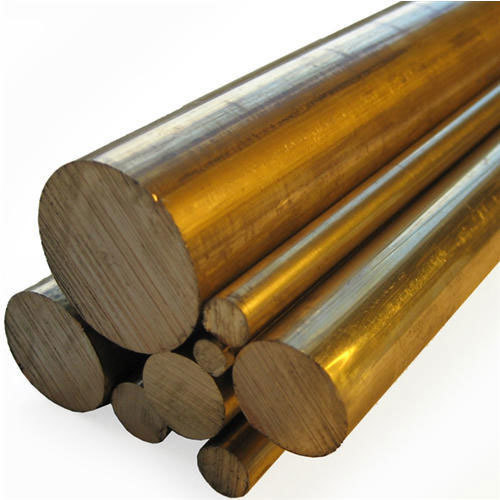
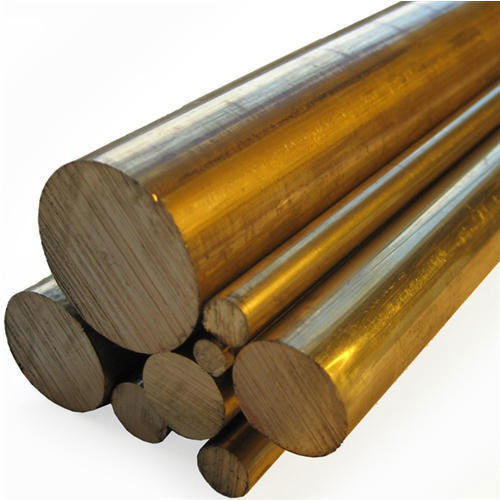
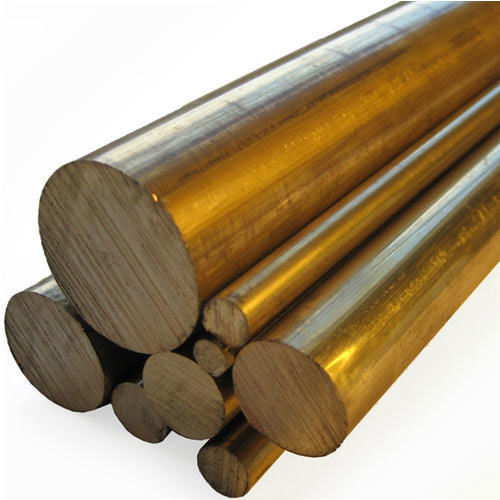
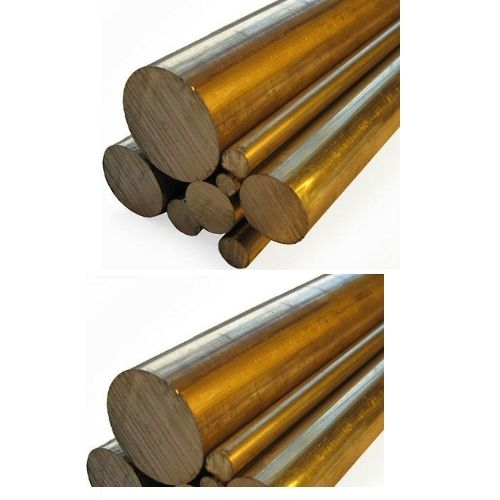
1634-CuZn38Sn1 Naval Brass Rod
350.00 - 450.00 INR/Kilograms
Product Details:
- Type Naval Brass Rod
- Material Copper Zinc Tin Alloy
- Grade 1634
- Tolerance +/- 0.5 mm
- Alloy CuZn38Sn1
- Temper Hard / Half Hard / Annealed
- Length Standard 3 Meters (Customizable)
- Click to View more
X
1634-CuZn38Sn1 Naval Brass Rod Price And Quantity
- 250 Kilograms
- 350.00 - 450.00 INR/Kilograms
1634-CuZn38Sn1 Naval Brass Rod Product Specifications
- Copper Zinc Tin Alloy
- +/- 0.5 mm
- Naval Brass Rod
- As per size and length
- 8 mm to 150 mm
- Round Rod
- 1634
- CuZn38Sn1
- Golden Yellow
- Standard 3 Meters (Customizable)
- Hard / Half Hard / Annealed
- 80-110 HB
- 15% Min
- Bright / Polished
- Good
- 28% IACS
- 8.44 g/cm
- IS 1634, ASTM B21
- 120 MPa
- Marine Fittings, Valve Stems, Nuts, Bolts, Shafts, Weldable Components
- Excellent in Marine & Industrial Atmospheres
- 380 - 540 MPa
- Export Standard Packing
1634-CuZn38Sn1 Naval Brass Rod Trade Information
- 20000 Kilograms Per Month
- 4 Week
Product Description
1634-CuZn38Sn1 Naval Brass Rod
We fabricate a finest range of Naval Brass, which are renowned for their high strength, rust proof and durability features. Naval brass is a copper alloy containing 60% copper, 75% tin and around 39.25% zinc. These are made up of high-grade raw material and can be availed in the form of sheet, plate, rods and circle. Our range of naval brass is broadly used in marine and construction industry.
Specifics:
Naval Brass - IS: 291 Gr l & ll
Specifications:
| Rod Brass |
|
| Naval Brass |
|
| Chemical Requirements | Garde I | Grade II | |||
| Copper | 61.0 - 64.0% | 59.0 - 62.0% | |||
| Lead | 0.20% max | 0.50 to 1.0% | |||
| Tin | 1.0 to 1.50% | 0.50 to 1.0% | |||
| Iron | 0.10% max | - | |||
| Other Imp. | 0.20% max | 0.20% max | |||
| Zinc | Remainder | Remainder | |||
| Physical Properties | |||||
| Condition | Size | T.S. 2 Kg/mm2 | EL% Min | T.S. 2 Kg/mm2 | EL% Min |
| Half-Hard (HB) | Upto 12.5 | 40 min | 18% | 40 min | 15% |
| Fabrication Properties | ||
| Capacity for being |
|
|
| Cold Worked | Fair | Poor |
| Hot Worked | Excellent | Good |
| Machinability Rating | 30% | 50% |
| Forgeability Rating | 90% | 90% |
| Silver Alloy Brazing | Excellent | Excellent |
| Soft Soldering | Excellent | Excellent |
| Oxyacetylene Welding | Good | Not Suitable |
| Uses | ||
| Gr I : Condenser Components, Propeller Shaft, Marine hardware where bending is required. | ||
| Gr II : Marine Hardware, Screw Machine, Valve Stems and Components for Naval use. | ||
Outstanding Corrosion Resistance
The 1634-CuZn38Sn1 Naval Brass Rod provides excellent resistance to corrosion, especially in saltwater and industrial atmospheres. This makes it an excellent material choice for marine industries where durability and longevity are crucial, helping to reduce maintenance and replacement costs over time.
Versatile Mechanical Properties
With a tensile strength ranging from 380 to 540 MPa and a minimum elongation of 15%, this naval brass rod offers an optimal balance of strength and ductility. Its hardness (80110 HB) and yield strength (120 MPa) further ensure reliability for demanding applications such as valve stems and mechanical shafts.
Precision Engineering and Machinability
Manufactured according to strict international standards (IS 1634, ASTM B21), the CuZn38Sn1 naval brass rod is known for its tight tolerances (+/- 0.5 mm) and good machinability. This allows for efficient processing into customized components, fitting the exact requirements of a wide spectrum of engineering projects.
FAQs of 1634-CuZn38Sn1 Naval Brass Rod:
Q: How is the 1634-CuZn38Sn1 Naval Brass Rod typically used in marine and industrial applications?
A: This brass rod is widely used in marine fittings, valve stems, nuts, bolts, shafts, and other weldable components, due to its excellent corrosion resistance and mechanical strength in harsh environments.Q: What standards and grades does the 1634-CuZn38Sn1 Naval Brass Rod conform to?
A: The rod is manufactured to IS 1634 and ASTM B21 standards, and corresponds to grade 1634 with an alloy composition of CuZn38Sn1, ensuring consistent quality and reliability.Q: When should you choose the 1634-CuZn38Sn1 Naval Brass Rod over other brass alloys?
A: Select this naval brass rod when you require superior corrosion resistance in saltwater or industrial atmospheres combined with good mechanical strength, machinability, and bright surface finish.Q: Where is the 1634-CuZn38Sn1 Naval Brass Rod distributed and supplied?
A: This product is distributed, exported, and supplied by manufacturers, traders, and service providers across India and internationally, often packaged in export-standard packing for secure shipment.Q: What is the manufacturing process for the 1634-CuZn38Sn1 Naval Brass Rod?
A: The rods are manufactured according to precise standards with options for hard, half-hard, or annealed tempers, ensuring optimal structure and machinability. They are provided in standard 3-meter lengths but can be customized as needed.Q: How does the conductivity and machinability of this naval brass rod benefit users?
A: With a conductivity of 28% IACS and good machinability, this rod allows for straightforward fabrication into components while providing sufficient electrical conduction for specific engineering requirements.Tell us about your requirement

Price:
Quantity
Select Unit
- 50
- 100
- 200
- 250
- 500
- 1000+
Additional detail
Mobile number
Email

Other Products in 'Naval Brass Rod' category


- Shree Extrusions Limited
GST : 24AADCS0253P1Z9
- 217/218, GIDC, Phase-II, Okha-Rajkot Road, Dared,Jamnagar - 361004, Gujarat, India
- Mr. Pratik Kabra (CEO)
Mobile : +91-9825095960
Sales Department
Mobile : +91-9328105172 / 70, +91-9328105187 


- Phone :08045804979
- Mr Pratik (Director)
- Mobile :08045804979
 marketing@shree-extrusion.com
 Send Inquiry
 |
SHREE EXTRUSIONS LTD.
All Rights Reserved.(Terms of Use) Developed and Managed by Infocom Network Private Limited. |
