

|

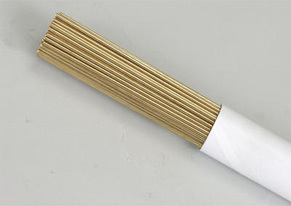
Brass Brazing Rods
480 INR/Kilograms
Product Details:
- Type Brass Brazing Rods
- Material Brass
- Grade BCuZn-1
- Tolerance ±0.05 mm
- Alloy Copper-Zinc
- Temper As Drawn
- Length 500 mm
- Click to View more
X
Brass Brazing Rods Price And Quantity
- 250 , , Kilograms
- 480 INR/Kilograms
- 450.00 - 500.00 INR/Kilograms
Brass Brazing Rods Product Specifications
- 2 mm
- BCuZn-1
- Rod
- Copper-Zinc
- 500 mm
- ±0.05 mm
- As Drawn
- 1
- Brass
- Golden
- Brass Brazing Rods
- 350 MPa
- Yes
- Bundle
- Good Electrical Conductivity
- Polished
- Industrial and Commercial
- Copper and Brass Jointing, General Purpose Brazing
- IS 2927
- 870C - 895C
Brass Brazing Rods Trade Information
- 20000 , , Kilograms Per Month
- 4 Week
Product Description
Brass Brazing Rods
Copper alloys are base metal alloys used for high temperature brazing of steels or tungsten carbide. Cost effective alternative to silver brazing alloys wherein high joint strength can be readily achieved. Some alloys also offer excellent corrosin resistance with thermal and electrical conductivity. we offer these alloys in standard composition to suitable specific application available in wires and rods.
Technical Specification
| GermanyDIN | Europe EN | Inter.StandardOrg.ISO | Aws | ||
| Din:8513 | En1044 | 17672(2010-11) | A5.8.89 | ||
| Chemical Composition | L-CuZn40 | Mn2 | |||
| Copper | 60 | 60 | |||
| Zinc | 39.7 | 39.7 | |||
| Silicon | 0.3 | 0.3 | |||
| Mn | - | 0.2 | |||
Uses
- Use for brass brazing ,steels malleable cast iron, copper,
- copper alloy with melting temperatures greater than 950°C (Solidous), nickel, nickel alloys.
- Mn2 Use for copper, cast and malleable iron brazing.
Precision Engineering for Superior Joints
Our Brass Brazing Rods are meticulously crafted to ensure robust performance across a range of brazing applications. Complying with IS 2927 standards, each rod delivers dependable strength and a consistently polished finish, enhancing both mechanical and electrical connections. The precise alloy composition ensures reliable melting and bonding for critical copper and brass assemblies.
Versatile Applications Across Sectors
Engineered for both industrial and commercial usage, these rods excel in jointing copper and brass parts, supporting multiple sectors from manufacturing to electrical. The as drawn temper and carefully controlled tolerance provide versatility, making them suitable for general purpose brazing in demanding environments.
FAQs of Brass Brazing Rods:
Q: How are Brass Brazing Rods typically used in industrial and commercial environments?
A: Brass Brazing Rods are used to join copper and brass components by heating them and applying the rod to create strong, corrosion-resistant bonds. They are particularly favored in plumbing, electrical, and manufacturing industries, owing to their good electrical conductivity and robust joint formation.Q: What is the recommended process for achieving the best results with these brazing rods?
A: For optimal results, clean the surfaces to be joined, heat the joint area evenly to the rods melting temperature range (870C - 895C), and then apply the rod until it flows smoothly, ensuring a thorough and reliable joint. Allow the assembly to cool naturally to maintain bond integrity.Q: When should I choose Brass Brazing Rods over soldering or welding methods?
A: Brass Brazing Rods are ideal when you need a stronger joint than soldering and a less intense process than welding, especially for copper or brass materials where maintaining good electrical conductivity and corrosion resistance is important.Q: Where can these Brass Brazing Rods be applied most effectively?
A: These rods are well-suited for use in electrical assembly, refrigeration, plumbing, and fabrication industriesanywhere reliable copper-brass jointing or general-purpose brazing is required in Indias industrial and commercial sectors.Q: What benefits do these Brass Brazing Rods offer in terms of performance and longevity?
A: Their corrosion resistance, high tensile strength, and good conductivity ensure lasting, dependable joints that perform well under industrial conditions. Their polished finish and precise manufacturing also contribute to reliability in demanding projects.Q: What is included in the brass brazing rod bundle packaging?
A: The rods are packaged as bundleseach rod measures 500 mm in length and has a 2 mm diameter, with a weight of 1 kg per bundle, ensuring ease of handling, transport, and storage for bulk applications.Tell us about your requirement

Price:
Quantity
Select Unit
- 50
- 100
- 200
- 250
- 500
- 1000+
Additional detail
Mobile number
Email

Other Products in 'Brass Rods' category



- Shree Extrusions Limited
GST : 24AADCS0253P1Z9
- 217/218, GIDC, Phase-II, Okha-Rajkot Road, Dared,Jamnagar - 361004, Gujarat, India
- Mr. Pratik Kabra (CEO)
Mobile : +91-9825095960
Sales Department
Mobile : +91-9328105172 / 70, +91-9328105187 


- Phone :08045804979
- Mr Pratik (Director)
- Mobile :08045804979
 marketing@shree-extrusion.com
 Send Inquiry

 |
SHREE EXTRUSIONS LTD.
All Rights Reserved.(Terms of Use) Developed and Managed by Infocom Network Private Limited. |
