

|

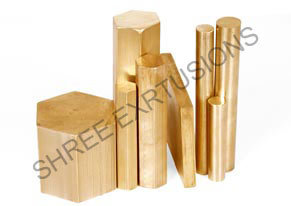
Free Cutting Brass Rods
480 INR/Kilograms
Product Details:
- Type Free Cutting Brass Rod
- Material Brass
- Grade IS 319 / IS 4413 / BS 249 / EN 12164
- Tolerance +/- 0.02 mm
- Alloy Copper-Zinc Alloy
- Temper Hard / Half Hard / Soft
- Length 2 Meter to 6 Meter
- Click to View more
X
Free Cutting Brass Rods Price And Quantity
- 250 Kilograms
- 480 INR/Kilograms
- 450.00 - 500.00 INR/Kilograms
Free Cutting Brass Rods Product Specifications
- Golden Yellow
- Free Cutting Brass Rod
- 2 Meter to 6 Meter
- Copper-Zinc Alloy
- 3 mm to 150 mm
- Hard / Half Hard / Soft
- +/- 0.02 mm
- Brass
- Round / Hex / Square
- Varies as per dimensions
- IS 319 / IS 4413 / BS 249 / EN 12164
- Good Electrical Conductivity
- Automobile, Electrical, Engineering, Hardware Industries
- 850C - 900C
- Wooden Box / Bundled
- Excellent
- 8.5 g/cm3
- Bright & Smooth
- High
Free Cutting Brass Rods Trade Information
- 20000 Kilograms Per Month
- 4 Week
Product Description
The offered free cutting brass rods are commonly used to produce hooks, fasteners, hinges, bolts, nuts, lock bodies and thread parts. These rods are best for high speed gears, pinions, and screw machine parts. Great soldering and brazing suitability makes these rods demanded among clients. It is also used to manufacture automobile and electronic parts. For different industrial purpose, these rods are available in round, flat, hexagonal, square and rectangular shape. Good heat and thermal conductivity properties make these rods demanded in electrical sector. In addition, the use of these free cutting brass rods are beneficial to reduce the tooling and production cost significantly.| Chemical Requirements | Grade I | ||||||
| Copper | 56.0 - 59.0% | ||||||
| Lead | 2.0 to 3.50% | ||||||
| Iron | 0.35% max. | ||||||
| Total Imp. Excl. Iron | 0.70% max. | ||||||
| Zinc | Remainder | ||||||
| Physical Properties | |||||||
| Condition | Size | T.S. MPA | EL% Min | ||||
| Annealed (O) | 6-25 25-50 50 above | 345 315 285 | 12 17 22 | ||||
| Half-Hard (HB) | 6-12 12-25 25-50 50 above | 405 395 355 325 | 4 6 12 17 | ||||
| Hard (HD) | 6-12 12-25 | 550 490 | - 4 | ||||
| Fabrication Properties | |||||||
| Capacity for being | |||||||
| Cold worked | Poor | ||||||
| Hot formed | Fair | ||||||
| Machinability Rating | 100.00% | ||||||
| Suitability for soldering | Excellent | ||||||
| Suitability for Brazing | Good | ||||||
| Uses | |||||||
| Precision Components, Hardware, Hinges, Lock Bodies, Screws, Nuts & Bolts | |||||||
| Chemical Requirements | Grade II | Grade III | |||||
| Copper | 60.0 - 63.0% | 60.0 - 63.0% | |||||
| Lead | 2.50 to 3.70% | 0.50 to 1.50% | |||||
| Iron | 0.35% max | 0.20% max | |||||
| Total Imp. Excl. Iron | 0.50% max | 0.50% max | |||||
| Zinc | Remainder | Remainder | |||||
| Physical Properties | |||||||
| Condition | Size | T.S. T.S. MPA | EL% Min | T.S. MPA | EL% Min | ||
| Annealed (O) | 6-25 25-50 50 above | 355 305 275 | 15 20 25 | 315 285 255 | 22 27 32 | ||
| Half-Hard (HB) | 6-12 12-25 25-50 50 above | 395 385 345 315 | 7 10 15 20 | 355n 345 305 285 | 8 12 22 27 | ||
| Hard (HD) | 6-12 12-25 | 550 485 |
4 | 460 400 |
4 | ||
| Fabrication Properties | |||||||
| Capacity for being | |||||||
| Cold worked | Poor | Fair | |||||
| Hot formed | Fair | Excellent | |||||
| Machinability Rating | 90.00% | 80.00% | |||||
| Suitability for soldering | Excellent | Excellent | |||||
| Suitability for Brazing | Good | Excellent | |||||
| Uses | |||||||
| Gr II : Gear, Pinions, Precision, Automobile, Electronic Parts | |||||||
| Gr III : Precision Components Machining with Riveting Operation | |||||||
Versatile Engineering Applications
Free Cutting Brass Rods are extensively utilized across a range of industries, including electrical, automobile, and hardware sectors due to their excellent machinability and corrosion resistance. Their adaptability in various mechanical assemblies makes them a preferred choice for precision components and connectors.
Superior Surface Quality and Machinability
The rods are crafted to feature a bright and smooth surface, ensuring both aesthetic appeal and minimal surface preparation for further processing. Their free cutting nature and tight tolerance of +/- 0.02 mm allow for high accuracy in fabrication, reducing machining effort and tool wear.
Reliable Quality and Flexible Supply
Manufactured using top-quality copper-zinc alloys meeting IS 319, IS 4413, BS 249, and EN 12164 standards, these rods are available as hard, half-hard, or soft tempers to suit a variety of needs. Distributed and supplied in protective wooden boxes or bundled packaging, they are available for domestic and export markets in India.
FAQs of Free Cutting Brass Rods:
Q: How are Free Cutting Brass Rods typically used in industrial applications?
A: Free Cutting Brass Rods are primarily used in manufacturing components for the automobile, electrical, and engineering industries. Their excellent machinability allows for precision turning, drilling, and shaping, making them ideal for connectors, terminals, and various hardware parts.Q: What benefits does the bright and smooth surface finish of these brass rods provide?
A: The bright and smooth surface finish enhances the rods visual appeal and reduces the need for additional finishing processes. This quality ensures better compatibility with plating or coating, resulting in cleaner assemblies and reduced post-processing costs.Q: When should I choose a specific temper (hard, half hard, or soft) for these rods?
A: The selection of temper depends on the applications mechanical requirements. Hard tempers offer higher strength for structural components, while half hard and soft tempers provide better flexibility and are suitable for parts that require forming or bending.Q: Where are these Free Cutting Brass Rods commonly distributed and supplied from?
A: These brass rods are manufactured, distributed, exported, and supplied by various companies throughout India, catering to both domestic and international markets. Packaging options include secure wooden boxes or bundled shipments for safe transport.Q: What is the process for ensuring accuracy and tolerance in these rods?
A: Stringent manufacturing controls and precision machinery are used to achieve a tight diameter tolerance of +/- 0.02 mm. This accuracy is maintained throughout production, ensuring consistent dimensional reliability for high-quality assemblies.Q: How does the copper-zinc alloy composition affect the properties of these rods?
A: Being a copper-zinc alloy, the material offers a balance of good electrical conductivity, mechanical strength, and high corrosion resistance, making it suitable for a wide range of engineering and electrical applications while maintaining machinability.Tell us about your requirement

Price:
Quantity
Select Unit
- 50
- 100
- 200
- 250
- 500
- 1000+
Additional detail
Mobile number
Email

Other Products in 'Brass Rods' category



- Shree Extrusions Limited
GST : 24AADCS0253P1Z9
- 217/218, GIDC, Phase-II, Okha-Rajkot Road, Dared,Jamnagar - 361004, Gujarat, India
- Mr. Pratik Kabra (CEO)
Mobile : +91-9825095960
Sales Department
Mobile : +91-9328105172 / 70, +91-9328105187 


- Phone :08045804979
- Mr Pratik (Director)
- Mobile :08045804979
 marketing@shree-extrusion.com
 Send Inquiry
 |
SHREE EXTRUSIONS LTD.
All Rights Reserved.(Terms of Use) Developed and Managed by Infocom Network Private Limited. |
