
|

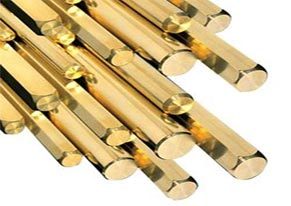
Lead Free Brass Rods
480 INR/Kilograms
Product Details:
- Type Lead Free Brass Rods
- Material Brass
- Grade CW510L, CW511L, CW508L, IS 4413, JIS C3604, ASTM B16
- Tolerance 0.05 mm
- Alloy Lead Free (CuZn36, CuZn37, CW508L, CW511L, etc.)
- Temper Annealed, Half Hard, Hard
- Length 2 to 5 meters
- Click to View more
X
Lead Free Brass Rods Price And Quantity
- 480 INR/Kilograms
- 450.00 - 500.00 INR/Kilograms
- 250 Kilograms
Lead Free Brass Rods Product Specifications
- As per size and length
- Brass
- Annealed, Half Hard, Hard
- 2 to 5 meters
- CW510L, CW511L, CW508L, IS 4413, JIS C3604, ASTM B16
- 5 mm to 80 mm
- Lead Free (CuZn36, CuZn37, CW508L, CW511L, etc.)
- Lead Free Brass Rods
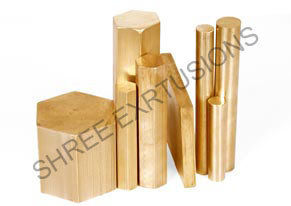
- Round, Hex, Square
- Golden Yellow
- 0.05 mm
- RoHS Compliant
- Used in Sanitary Fittings, Electrical Components, Precision Instruments, Engineering Applications
- Bundle or Wooden Box
- Excellent
- High
- Bright, Smooth, Polished
- <0.1%
- Good Electrical and Thermal Conductivity
Lead Free Brass Rods Trade Information
- 20000 Kilograms Per Month
- 4 Week
Product Description
We are offering lead free brass rods in number of specifications to justify client diverse needs. These rods are good in high strength, excellent wear resistant, lead free, high hardness, and good machinability characteristics. The offered rods are widely used for producing pump impellers, piston rings, valve bodies, gears parts, fasteners, and rivets. It is also used in hot forging, blanking, and riveting applications. Good creep and corrosion resistant properties make these rods suitable for high precision workability operations. It is also used for manufacturing machine components. The provided lead free brass rods are non-magnetic in nature for electric and automobile meter frame.
These rod are also known as Reverting Quality Brass Rod and is mainly used in blanking, riveting , bending, hot forging, watch case and belts, etc.
These rod are also known as Reverting Quality Brass Rod and is mainly used in blanking, riveting , bending, hot forging, watch case and belts, etc.
- IS4413
- IS4170
- DTD-627
- BS2874/86 CZ-109
- BS2872/86 CZ-108
| Chemical Requirements | CuZn40 | CuZn35 | CuZn37 |
| Copper | 59.0 - 62.0% | 63.0 - 68.5% | 62.0 - 65.0% |
| Lead | 0.75% max | 0.05% max | 0.30% max. |
| Iron | 0.10% max | 0.05% max | 0.10% max |
| Total Imp. | 0.30% max | 0.30% max | 0.60% max |
| Zinc | Remainder | Remainder | Remainder |
Outstanding Surface Finish and Durability
These lead free brass rods boast a bright, smooth, and polished finish that offers both aesthetic appeal and functional advantages. Their excellent resistance to corrosion makes them suitable for settings demanding robust and long-lasting materials, ensuring dependable performance in demanding environments.
Superior Conductivity and Precision
Engineered for good electrical and thermal conductivity, these rods play a vital role in applications requiring reliable signal transmission or heat transfer. Their tight dimensional tolerances (0.05 mm) and availability in annealed, half-hard, or hard tempers ensure precision and versatility in manufacturing and engineering tasks.
Compliant, Sustainable, and Versatile
Produced to meet international standards like RoHS, IS 4413, ASTM B16, and JIS C3604, these rods help manufacturers and end-users comply with health and environmental regulations. The minimal lead content (<0.1%) supports safer, greener operations, while wide packaging and sizing options cater to diverse industry needs.
FAQs of Lead Free Brass Rods:
Q: How are lead free brass rods manufactured to achieve high machinability and precision tolerances?
A: Lead free brass rods are produced using advanced casting and extrusion techniques, followed by controlled temperingannealed, half-hard, or harddepending on the application. Precision machining and finishing processes ensure surface quality and maintain tight tolerances of 0.05 mm, facilitating flawless integration in engineering projects.Q: What benefits do lead free brass rods offer for sanitary fittings and electrical components?
A: These rods provide a combination of excellent corrosion resistance, bright appearance, and good electrical conductivity, which are vital for sanitary fittings ensuring longevity and hygiene, and for electrical components enabling efficient energy transfer and safety in operation.Q: When should you choose lead free brass rods over standard brass materials?
A: Lead free brass rods are preferred when regulatory compliance, safety, or environmental requirements such as RoHS standards must be met. They are also ideal in applications where minimal lead content is critical for health, especially in water supply systems, electronic parts, and food-processing equipment.Q: Where are lead free brass rods commonly applied within the industry?
A: These rods find use in sanitary fittings, precision instruments, electrical components, and general engineering applications, particularly where corrosion resistance, dimensional accuracy, and compliance with international standards are crucial.Q: What is the typical process for ordering and packaging lead free brass rods from suppliers in India?
A: Customers may order lead free brass rods in the desired shape (round, hex, square), size, grade, and temper. Packaging options include bundles for bulk delivery or wooden boxes for added protection, as per shipment and client specifications, ensuring safe transit and storage.Q: How does the low lead content in these brass rods benefit users and manufacturers?
A: By containing less than 0.1% lead, these brass rods reduce health risks, support compliance with RoHS and other regulations, and contribute to sustainable manufacturing. This makes them suitable for sensitive applications and helps manufacturers meet global environmental standards.Tell us about your requirement

Price:
Quantity
Select Unit
- 50
- 100
- 200
- 250
- 500
- 1000+
Additional detail
Mobile number
Email

Other Products in 'Brass Rods' category



- Shree Extrusions Limited
GST : 24AADCS0253P1Z9
- 217/218, GIDC, Phase-II, Okha-Rajkot Road, Dared,Jamnagar - 361004, Gujarat, India
- Mr. Pratik Kabra (CEO)
Mobile : +91-9825095960
Sales Department
Mobile : +91-9328105172 / 70, +91-9328105187 


- Phone :08045804979
- Mr Pratik (Director)
- Mobile :08045804979
 marketing@shree-extrusion.com
 Send Inquiry

 |
SHREE EXTRUSIONS LTD.
All Rights Reserved.(Terms of Use) Developed and Managed by Infocom Network Private Limited. |
