
|

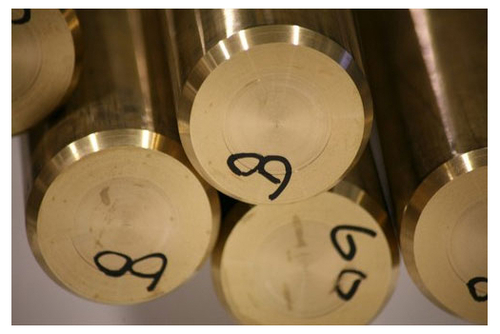
IS 320 HT1 High Tensile Brass Rods
350.00 - 450.00 INR/Kilograms
Product Details:
- Type High Tensile Brass Rod
- Material Brass
- Grade IS 320 HT1
- Tolerance 0.01 mm
- Alloy IS 320 HT1
- Temper HT1
- Length 300 mm to 3660 mm
- Click to View more
X
IS 320 HT1 High Tensile Brass Rods Price And Quantity
- 250 Kilograms
- 350.00 - 450.00 INR/Kilograms
IS 320 HT1 High Tensile Brass Rods Product Specifications
- High Tensile Brass Rod
- Brass
- IS 320 HT1
- 10 mm to 100 mm
- Round, Hex, Square
- As per dimensions
- 300 mm to 3660 mm
- Golden Yellow
- HT1
- IS 320 HT1
- 0.01 mm
- 500 700 MPa
- IS 320:1981
- Excellent
- Bundles or as specified
- 8.4 g/cm
- 20 30% (in 5D)
- 15% IACS
- Automobile, Marine, Electrical, Engineering, Fasteners
- Good
- Bright or Natural
IS 320 HT1 High Tensile Brass Rods Trade Information
- 20000 Kilograms Per Month
- 4 Week
Product Description
IS 320 HT1 High Tensile Brass Rods
CW713R is a high tensile brass which is alloyed with aluminum, manganese and silicon etc. which makes this alloy almost as hard as aluminum bronze, but considerably easier to process. CW713R also has good corrosion, wear resistance and machinability.
Typically this alloy is used in the automotive and hydraulic industries in forms of products such as Bearings for high load, slide-& wear-plates, valve guides, piston parts etc.
Chemical Composition
|
| Cu | Pb | Sn | Zn | Si | Ni | Fe | Al | Mn | Other |
| Min | 57 | 0.2 | - | - | 0.3 | - | - | 1.3 | 1.5 | - |
| Max | 59 | 0.8 | Max 0.4 | Rem | 1.3 | Max 1.0 | Max 1.0 | 2.3 | 3.0 | Max 0.3 |
Product Details:
| Minimum Order Quantity | 250 Kilogram |
| Material Grade | CW713 |
| Shape | Round |
| Usage/Application | Automotive and Hydraulic |
| Brand | SHREE EXTRUSIONS LIMITED |
| Diameter | 1 mm To 220 mm |
| Composition | As per CW713 |
| Tensile Strength | 540 N mm2 |
| Elongation | 12 |
| Temperature | 500 to 600 |
| Color | Yellow |
| Hardness | 160 HB |
| Material | Brass |
| Packaging Type | Wooden |
| Standard | CW713 |
| Astm | C67400 |
| Alloy Or Not | YES |
High Performance Across Industries
Tailored for the demanding needs of automobile, marine, electrical, and engineering sectors, IS 320 HT1 High Tensile Brass Rods deliver reliability and longevity. With exceptional strength and ductility, they are the preferred choice for manufacturing fasteners and high-stress components. Their adaptability makes them invaluable to both large-scale manufacturers and specialized engineering firms.
Stringent Standards and Superior Finish
Manufactured in adherence to IS 320:1981, these rods ensure both product consistency and safety. Customers may select between a bright or natural finish to suit specific application preferences. Precision in dimensions and a tight tolerance of 0.01 mm ensure seamless integration into diverse projects.
Outstanding Machinability and Durability
Rated as good for machinability and possessing excellent corrosion resistance, these brass rods can be shaped and handled with ease during fabrication. Their notable elongation ensures the materials withstand operational stresses, making them suitable for robust and long-lasting assemblies.
FAQs of IS 320 HT1 High Tensile Brass Rods:
Q: How are IS 320 HT1 High Tensile Brass Rods typically used in industry?
A: These rods are widely utilized in the manufacture of fasteners, automotive components, marine fittings, electrical connectors, and various engineering applications where high tensile strength and corrosion resistance are required.Q: What is the process for sourcing IS 320 HT1 Brass Rods in custom sizes?
A: You can source these rods in lengths ranging from 300 mm to 3660 mm and diameters between 10 mm and 100 mm by specifying your requirements to the supplier. Custom packaging, dimensions, and finishes can also be accommodated as per order details.Q: When should one choose IS 320 HT1 Brass Rods over standard brass rods?
A: IS 320 HT1 Brass Rods should be considered when your application requires greater tensile strength, improved elongation, and enhanced corrosion resistance, especially in demanding engineering or marine environments.Q: Where can IS 320 HT1 High Tensile Brass Rods be utilized?
A: These rods are suitable for use in automobile manufacturing, marine hardware, electrical components, precision engineering, and construction of fasteners, catering to a range of industrial sectors across India and globally.Q: What benefit does the high machinability rating offer during the manufacturing process?
A: A high machinability rating means these rods can be easily cut, shaped, and finished using standard tools, increasing efficiency and reducing production costs for manufacturers.Q: How does the excellent corrosion resistance of IS 320 HT1 Brass Rods add value?
A: Their excellent corrosion resistance ensures durability in harsh environments, particularly in marine and outdoor applications, leading to longer service life and reduced maintenance frequencies for the end product.Tell us about your requirement

Price:
Quantity
Select Unit
- 50
- 100
- 200
- 250
- 500
- 1000+
Additional detail
Mobile number
Email

Other Products in 'High Tensile Brass Rod' category


- Shree Extrusions Limited
GST : 24AADCS0253P1Z9
- 217/218, GIDC, Phase-II, Okha-Rajkot Road, Dared,Jamnagar - 361004, Gujarat, India
- Mr. Pratik Kabra (CEO)
Mobile : +91-9825095960
Sales Department
Mobile : +91-9328105172 / 70, +91-9328105187 


- Phone :08045804979
- Mr Pratik (Director)
- Mobile :08045804979
 marketing@shree-extrusion.com
 Send Inquiry

 |
SHREE EXTRUSIONS LTD.
All Rights Reserved.(Terms of Use) Developed and Managed by Infocom Network Private Limited. |
