
|

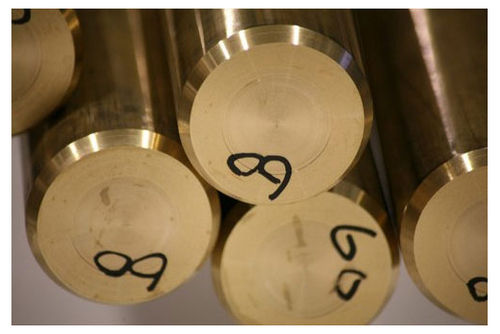
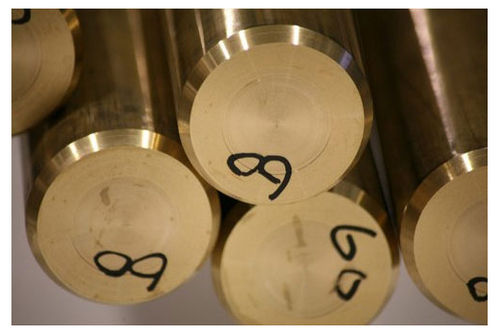
IS:304 HTB2 High Tensile Brass Rods
350.00 - 450.00 INR/Kilograms
Product Details:
- Type High Tensile Brass Rod
- Material Brass
- Grade IS:304 HTB2
- Tolerance 0.2 mm
- Alloy HTB2
- Temper Hot Rolled
- Length 2 to 6 meters
- Click to View more
X
IS:304 HTB2 High Tensile Brass Rods Price And Quantity
- 350.00 - 450.00 INR/Kilograms
- 250 Kilograms
IS:304 HTB2 High Tensile Brass Rods Product Specifications
- IS:304 HTB2
- Varies as per size
- 0.2 mm
- 12 mm to 50 mm
- Golden Yellow
- Hot Rolled
- High Tensile Brass Rod
- Round, Hex, Square
- 2 to 6 meters
- HTB2
- Brass
- 8.4 g/cm³
- Bright Polished
- IS 304
- Excellent
- 480-800 MPa
- Heavy Duty Engineering, Automotive, Marine, Valves, Hardware
- Smooth
- Min 350 MPa
- Good
- 12% Min
- Good Electrical & Thermal Conductivity
IS:304 HTB2 High Tensile Brass Rods Trade Information
- 20000 Kilograms Per Month
- 4 Week
Product Description
IS:304 HTB2 High Tensile Brass Rods
CW713R is a high tensile brass which is alloyed with aluminum, manganese and silicon etc. which makes this alloy almost as hard as aluminum bronze, but considerably easier to process. CW713R also has good corrosion, wear resistance and machinability.
Typically this alloy is used in the automotive and hydraulic industries in forms of products such as Bearings for high load, slide-& wear-plates, valve guides, piston parts etc.
Chemical Composition
|
| Cu | Pb | Sn | Zn | Si | Ni | Fe | Al | Mn | Other |
| Min | 57 | 0.2 | - | - | 0.3 | - | - | 1.3 | 1.5 | - |
| Max | 59 | 0.8 | Max 0.4 | Rem | 1.3 | Max 1.0 | Max 1.0 | 2.3 | 3.0 | Max 0.3 |
Product Details:
| Minimum Order Quantity | 250 Kilogram |
| Material Grade | CW713 |
| Shape | Round |
| Usage/Application | Automotive and Hydraulic |
| Brand | SHREE EXTRUSIONS LIMITED |
| Diameter | 1 mm To 220 mm |
| Composition | As per CW713 |
| Tensile Strength | 540 N mm2 |
| Elongation | 12 |
| Temperature | 500 to 600 |
| Color | Yellow |
| Hardness | 160 HB |
| Material | Brass |
| Packaging Type | Wooden |
| Standard | CW713 |
| Astm | C67400 |
| Alloy Or Not | YES |
Engineered for Demanding Applications
IS:304 HTB2 High Tensile Brass Rods are designed to perform reliably in heavy-duty environments. Their high tensile and yield strengths make them suitable for components subjected to substantial loads and stresses, such as those found in automotive, marine, and industrial engineering sectors.
Outstanding Material Properties
These brass rods are crafted from premium HTB2 alloy, offering excellent machinability, corrosion resistance, and a smooth, bright-polished finish. Their good electrical and thermal conductivity extends their use to electrical and thermal applications where performance and durability matter.
Available in Versatile Shapes and Sizes
To accommodate various engineering needs, the rods are available in round, hex, and square shapes, with lengths ranging from 2 to 6 meters and diameters from 12 mm to 50 mm. Each rod conforms to precise dimensional tolerances and comes in the distinct golden yellow color characteristic of high-quality brass.
FAQs of IS:304 HTB2 High Tensile Brass Rods:
Q: How are IS:304 HTB2 High Tensile Brass Rods typically used in industry?
A: These rods are primarily used in heavy-duty engineering, automotive, marine, valve manufacturing, and hardware production, where high strength and excellent corrosion resistance are required. Their good conductivity also makes them suitable for certain electrical and thermal applications.Q: What is the manufacturing process for IS:304 HTB2 Brass Rods?
A: IS:304 HTB2 Brass Rods are manufactured using a hot rolling process, which enhances their tensile strength and surface finish. The rods are then precisely cut to specified lengths with tight dimensional tolerances and polished to achieve a smooth, bright surface.Q: When should I consider using HTB2 grade over other brass alloys?
A: HTB2 grade brass is ideal when you need a combination of high tensile strength (480-800 MPa), minimum elongation of 12%, and excellent machinability. If your project involves heavy load-bearing components or exposure to corrosive environments, HTB2 is a reliable choice.Q: Where can these rods be supplied and in what shapes or sizes?
A: IS:304 HTB2 Brass Rods are available across India from multiple suppliers, manufacturers, exporters, and distributors. They come in round, hex, and square profiles, with diameters between 12 mm and 50 mm and lengths from 2 to 6 meters.Q: What benefits do IS:304 HTB2 Brass Rods offer compared to standard brass rods?
A: Compared to standard brass, IS:304 HTB2 rods provide higher strength, greater durability, and improved corrosion resistance, making them suitable for demanding applications. Their excellent machinability and bright, polished appearance are additional advantages.Q: How do I ensure proper usage and maximize the lifespan of these brass rods?
A: To maximize lifespan, select the correct rod size and shape for your application and follow recommended machining and installation guidelines. Regular inspection and maintenance in corrosive environments further enhance service life.Tell us about your requirement

Price:
Quantity
Select Unit
- 50
- 100
- 200
- 250
- 500
- 1000+
Additional detail
Mobile number
Email

Other Products in 'High Tensile Brass Rod' category




- Shree Extrusions Limited
GST : 24AADCS0253P1Z9
- 217/218, GIDC, Phase-II, Okha-Rajkot Road, Dared,Jamnagar - 361004, Gujarat, India
- Mr. Pratik Kabra (CEO)
Mobile : +91-9825095960
Sales Department
Mobile : +91-9328105172 / 70, +91-9328105187 


- Phone :08045804979
- Mr Pratik (Director)
- Mobile :08045804979
 marketing@shree-extrusion.com
 Send Inquiry

 |
SHREE EXTRUSIONS LTD.
All Rights Reserved.(Terms of Use) Developed and Managed by Infocom Network Private Limited. |
